
Keyword & Search Intent Research
Evaluated relevant legal searches and aligned priority queries with pages capable of satisfying the underlying user intent.
A focused SEO strategy helped Heritage Law Center build a stronger organic search presence, lift Semrush-estimated traffic well above its early-period baseline, and maintain visibility across a broad footprint of relevant search terms.
Rather than relying on unsupported claims, this case study uses the actual Semrush traffic and keyword trend screenshots from the project.
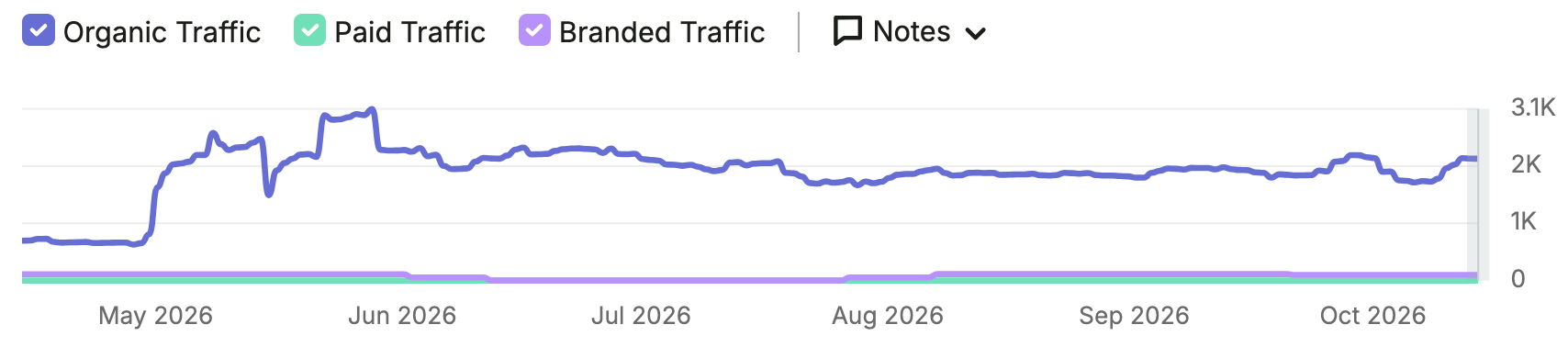
The Semrush trend begins below 1,000 estimated monthly organic visits, rises sharply above the 2,000 level, and reaches a peak close to 3,100. Through much of the later period, estimated traffic remained around the 2,000 range rather than returning to the early baseline.
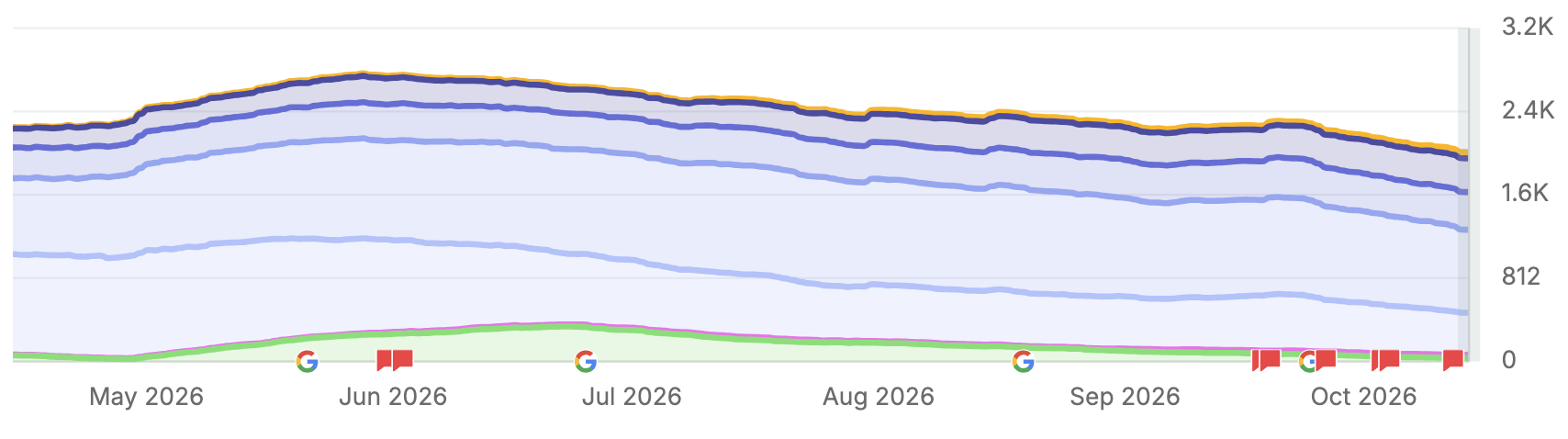
Semrush shows the site’s overall organic keyword footprint building toward roughly 2,800 ranking terms at its strongest point. The site continued to maintain a broad search presence across approximately 2,000 keywords toward the end of the displayed period.
Data source: Semrush Organic Research. Traffic values are third-party estimates and are presented as directional search-performance indicators rather than first-party analytics totals. Approximate figures are read from the supplied Semrush charts.
Estate planning and elder law searches are highly intent-driven. Prospective clients may begin with a specific legal service, a planning question, or an educational search long before contacting a firm.
The SEO opportunity was to strengthen the connection between Heritage Law Center’s core legal services and the informational topics prospective clients search for throughout the planning journey.
Instead of relying on one page or a narrow group of terms, the strategy focused on building a broader search presence through stronger page targeting, content coverage, internal relationships, and the underlying SEO foundation.
The strategy focused on strengthening the parts of the website that influence search relevance, discoverability, topical coverage, and the relationship between important pages.
Evaluated relevant legal searches and aligned priority queries with pages capable of satisfying the underlying user intent.
Strengthened page-level targeting through headings, content relevance, metadata, topical signals, and clearer optimization of important pages.
Improved content around relevant estate planning, elder law, probate, and related questions to support broader search discovery.
Focused optimization on commercially important legal services so relevant informational visibility could connect users with core areas of the practice.
Strengthened contextual relationships between useful resources and priority pages to make the site’s topic structure easier to understand and navigate.
Kept indexability, site structure, page accessibility, metadata, and other technical search factors aligned with the wider organic strategy.
The most useful positive signal is not simply the short-term peak. The traffic trend moved from an early level below 1,000 to a substantially higher range that remained around 2,000 through much of the later displayed period.
The campaign was built around more than one ranking factor or one page. Improving search targeting, service-page relevance, supporting content, internal relationships, and the broader SEO foundation created more opportunities for the website to appear across relevant legal searches.
Tell us about your website, current visibility, target market, and growth goals. We can identify the SEO opportunities that deserve attention first and build a focused strategy around them.
© 2026 Scalability Media. All Right Reserved.